Soho House Alternatives in London for Entrepreneurs and Executives: 10 Memberships Worth Considering
Capital A List Membership includes access to exclusive clubs, bars, events and priority restaurant bookings in addition to many other benefits. For more information please visit Capital A List Membership.
Soho House alternatives in London have become increasingly varied. For entrepreneurs and executives, the best options are not necessarily clubs that reproduce Soho House’s creative, sociable formula. They are memberships that offer stronger business networks, useful places to work, discreet settings for client meetings or more flexible access across the capital.
Soho House remains one of the world’s most recognisable members’ club groups. Its current global membership gives access to 48 Houses, while its events programme spans everything from film and fashion to wellness, dining and talks with industry leaders. Creativity and community remain central to the proposition.
But an entrepreneur spending Monday in the City, Wednesday entertaining clients in Mayfair and Thursday travelling may want something different from a single clubhouse network.
The Best Soho House Alternatives in London for Entrepreneurs & Executives
Why Are Entrepreneurs Looking for Alternatives to Soho House?
There is nothing inherently wrong with Soho House as a business membership. Members use its Houses for meetings, informal working and networking, and the group still has a formidable international footprint. The difference is one of emphasis.
Soho House’s culture remains closely associated with creative industries and a lifestyle built around restaurants, events, travel, wellness and socialising. Its own programming continues to place considerable emphasis on film, music, fashion and creative community.
For an entrepreneur or executive, however, the priorities may be rather more specific.
You might need private meeting rooms rather than another seductive sofa. You might care more about who is in the professional network than who is at the bar. Perhaps you regularly entertain clients and need somewhere appropriately polished but not stiff. Or you may simply spend too much of your week crossing London to justify paying primarily for access to one favourite clubhouse.
The strongest Soho House alternatives in London therefore do not all look like Soho House. Some are better workspaces. Some are better business communities. Others offer the luxury, hospitality and social access of a members’ club without requiring you to build your London life around one building.
Here are the ten we would consider.
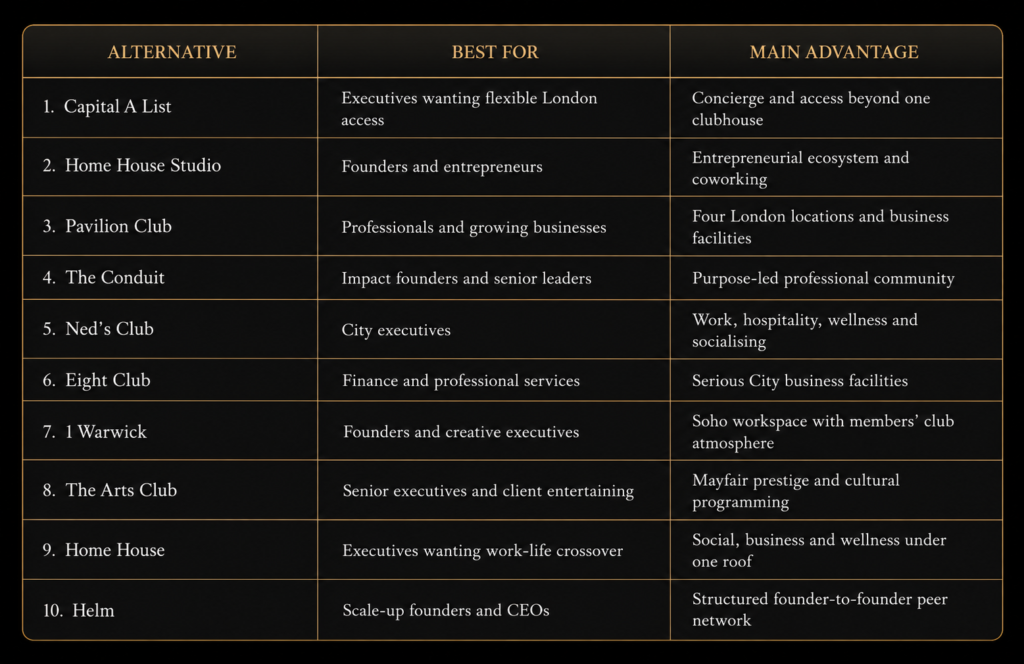
Capital A List — Best Overall for Flexible London Access

Capital A List is the least conventional Soho House alternative on this list, which is precisely why it makes sense for certain executives.
It is not a private members’ club with its own drawing room, rooftop or pool. Instead, Capital A List has operated as a London luxury lifestyle and concierge membership since 2010, helping members with priority restaurant reservations, selected private members’ clubs, VIP nightlife, exclusive events and lifestyle requests. Membership currently starts from £50 per month, according to its application page.
The advantage for an entrepreneur is mobility. London is effectively the clubhouse.
A Monday client dinner may call for Mayfair. Wednesday might involve drinks at a private club. On Friday, you may need a difficult restaurant reservation followed by somewhere suitable for a larger group. Rather than asking one venue to accommodate every version of your life, the concierge helps match the venue to the occasion.
That becomes even more relevant professionally. Capital A List’s Corporate Membership covers business dinners, meetings, hospitality, private members’ clubs, events and other concierge requests for small teams.
It is also worth being clear about what the membership is not. Capital A List does not replace Soho House if what you want is a desk you can return to every morning or one familiar bar where everybody knows you. Access to third-party venues is also subject to their own policies and availability. What it offers instead is a broader layer of assistance around how you use London.
Best for: entrepreneurs, executives and businesses that value concierge support, hospitality and flexibility more than owning a permanent clubhouse routine.
How it differs from Soho House: Soho House gives you access to its own network of Houses. Capital A List helps you navigate a wider network of London restaurants, private clubs, events and nightlife.
Home House Studio — Best for Entrepreneurs and Founders

Home House Studio is perhaps the most literal answer to the question: where should I join if I want a club that takes my working life seriously?
Formerly known as Home Grown, it was repositioned in 2026 as Home House Studio, a coworking-led sister to Home House. The idea is straightforward: Home House remains more socially focused, while the Studio is designed around professional growth, productivity and the increasingly blurred border between work and leisure.
The club explicitly describes its community as bringing together entrepreneurs, creators and leaders. Full membership covers coworking and study spaces, meetings, restaurants and bars, an events programme and what it calls an “entrepreneurial ecosystem”.
That makes it considerably more purposeful during the daytime than many traditional members’ clubs. You can settle in to work, take a meeting without feeling as though you have commandeered a restaurant table for two hours, then move into the social side of the House later.
There is still enough polish to make the place feel like a club rather than a serviced office. matEntrepreneurs rarely need another fluorescent coworking floor; they need somewhere where doing business does not kill the pleasure of being there.
Best for: founders, investors, start-up teams and entrepreneurs who want their club to function as a genuine extension of the working day.
Why choose it over Soho House? The entrepreneurial ecosystem is part of the product rather than something you hope to encounter incidentally at the next table.
Pavilion Club — Best for Networking Across London
Pavilion is one of the most practical choices for someone whose diary refuses to stay in one postcode.
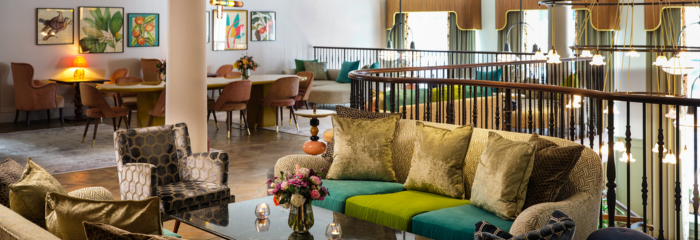
The group currently operates clubs in Knightsbridge, the City, Kensington and Fulham. Across the portfolio, the emphasis is on the intersection between business and hospitality: coworking areas, offices, meeting rooms and lounges sit alongside restaurants, bars, terraces and member events. Pavilion describes itself directly as a business club for creatives and professionals.
The networking side has become more explicit too. Its dedicated networking membership includes weekly events ranging from lunches and masterclasses to panel discussions, live music, wellness sessions and member parties.
That combination makes Pavilion less dependent on the vague promise that you might happen to meet somebody useful over an Old Fashioned. There is programming specifically designed to put people in the same room.
The Knightsbridge site is particularly useful for client meetings and West London days, while the City location gives the membership more obvious professional reach. For founders who split their week between investors, clients and an actual team, that geographic flexibility is valuable.
Best for: entrepreneurs, consultants and growing businesses that want workspace, networking and hospitality across several parts of London.
Why choose it over Soho House? Pavilion feels more deliberately engineered around professional use, without turning into a conventional office club.
The Conduit — Best for Purpose-Led Entrepreneurs

The Conduit is one of the few London clubs where asking somebody what they do may lead to a discussion about carbon markets, humanitarian policy or impact investing before anyone gets around to ordering a drink.
Its Covent Garden club is built around a purpose-driven community rather than a particular industry or social scene. Members include social entrepreneurs, SME owners, investors, philanthropists, business leaders, NGO professionals and policymakers. The Conduit says its community numbers more than 2,000 people from over 80 countries, including hundreds of founders and senior executives.
Programming is central. The club stages more than 150 impact-related events a year, from panels and workshops to conferences, alongside the more familiar dinners, parties and cultural events of a members’ club.
The building itself still matters: this is not a conference network with a token lounge attached. Its Covent Garden home is designed for meeting, working, eating and spending time between appointments. But the strongest reason to join is the membership itself. If your world overlaps with sustainability, philanthropy, impact investment, social enterprise or policy, the concentration of relevant people is unusually compelling.
Best for: impact founders, investors, ESG leaders and senior executives who want their professional community to share a wider sense of purpose.
Why choose it over Soho House? At The Conduit, the conversation is more likely to be the point of the membership than the backdrop to it.
Ned’s Club — Best for City Executives

For somebody whose working week revolves around the City, Ned’s Club requires very little explanation.
Set inside The Ned on Poultry, it has the scale and facilities to absorb a remarkably large portion of a member’s day. The club describes itself as a place for professionals to meet, work and socialise, with member areas that include the rooftop, coworking spaces, semi-private rooms, a gym and spa.
Upstairs, there is a rooftop pool, restaurant and terrace with views over the City. Downstairs, members have spaces including The Vault cocktail lounge and the Long Bar, which functions as coworking space by day. Fitness is not treated as an afterthought either: the gym extends to 620 square metres, while the spa includes a 20-metre pool, sauna, steam room and treatment rooms.
The proposition is broad enough that a member could take an informal meeting, stay to work, train and then remain for dinner without leaving the building.
That is hardly minimalist, but efficiency is part of the luxury.
Best for: bankers, lawyers, investors and corporate executives who spend much of their week in or around the City.
Why choose it over Soho House? The atmosphere and facilities are naturally aligned with City working life, while still retaining the social and hospitality side expected from a modern private club.
Eight Club — Best for Doing Business in the City

Eight is less coy than many private clubs about the fact that members have work to do.
Its London locations include Bank and Moorgate, alongside Eight Core and its dedicated Eight Works coworking proposition. Facilities include reservable desks, soundproofed booths, podcast studios, meeting spaces, dining and fitness. The club itself describes one part of the offering simply as “a place to focus”.
The setting still offers the usual rewards for finishing your emails: restaurants, bars, events and spaces designed for entertaining. But Eight’s real appeal is that its professional facilities do not feel awkwardly bolted onto a social club.
For executives in financial services, consulting, law or other City-centric industries, it can function as an alternative meeting base as much as a lifestyle membership.
If your main reason for joining is to have somewhere useful between appointments—rather than hoping your laptop is still socially acceptable after a certain hour—Eight deserves a serious look.
Best for: finance, legal, consulting and professional-services executives.
Why choose it over Soho House? Less creative-club theatre; more practical infrastructure for people who need to conduct actual business.
1 Warwick — Best for Soho-Based Founders and Creative Executives
1 Warwick is the option for people who like Soho House’s design consciousness and neighbourhood energy but want their membership to work harder from nine to five.
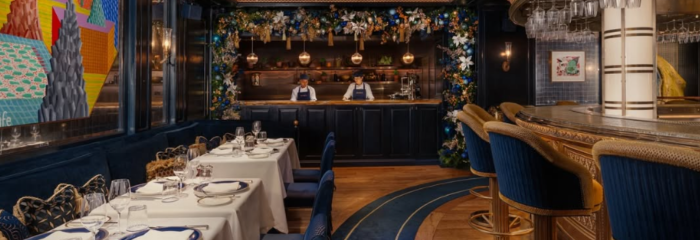
The Maslow’s property occupies a Neo-Baroque building on Warwick Street and combines members’ lounges with shared and private workspaces, meeting rooms, a gym, fitness classes, events and hospitality. Downstairs sits Nessa, while the rooftop is home to Yasmin.
There is a thoughtfulness to the working spaces that separates the club from the familiar sight of laptops spreading across every available café table. Dedicated workspace memberships exist alongside more conventional House access, and members can use the wider Maslow’s network, including Mortimer House and its Kensington property.
The result feels particularly well suited to people whose professional world is still creative—media, design, branding, technology—but who no longer regard “somewhere with Wi-Fi” as an adequate office strategy.
You can hold a proper meeting here. Equally, you can disappear upstairs for lunch and remember why you stopped working from home in the first place.
Best for: founders, agency leaders, media executives and creative professionals based around Soho and the West End.
Why choose it over Soho House? Similar design-led appeal, but with workspace positioned much closer to the centre of the proposition
The Arts Club — Best for Senior Executives and Client Entertaining
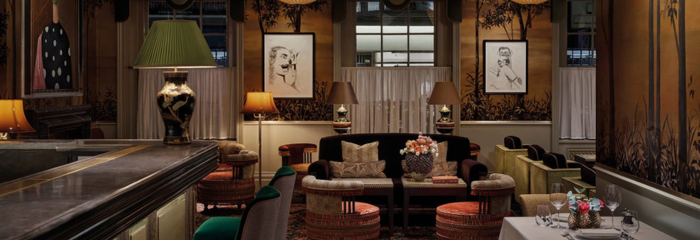
The Arts Club has been doing members’ clubs since long before anyone thought to put a rooftop pool above one. Founded in 1863 for people connected to the arts, literature and sciences, it now occupies a townhouse on Dover Street in Mayfair and describes its community as one of creative thinkers and entrepreneurs.
It remains unmistakably cultural. Art exhibitions, dining, live music and events are fundamental to the club, while private spaces can be used for everything from business launches to client entertaining. Members also have reciprocal arrangements with a collection of clubs internationally.
For an executive, the appeal is less about coworking infrastructure and more about context. The Arts Club is somewhere you can take somebody important without appearing to have selected a venue from a spreadsheet called Client Dinner Options.
It is more formal than Soho House, although not necessarily stuffier. The real distinction is maturity: Mayfair, culture and discretion replace some of the youthful social buzz.
Best for: established founders, senior executives and professionals who place a high value on client entertaining, culture and an international network.
Why choose it over Soho House? More polished, more Mayfair and better suited to occasions where the room itself needs to make an impression.
Home House — Best for Work-Life Crossover
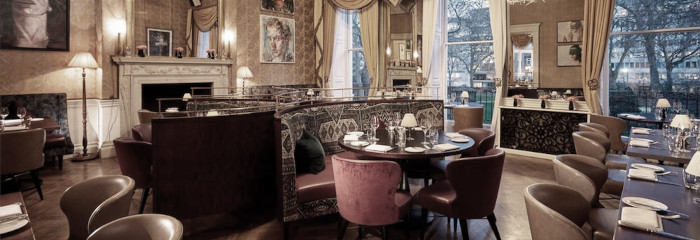
Home House and Home House Studio now have clearer individual identities, which is why both deserve consideration.
Where the Studio prioritises professional growth and coworking, Home House on Portman Square leans more heavily into the classic members’ club lifestyle: restaurants, bars, events, bedrooms, wellness facilities and places to spend time without needing to call it networking.
That does not mean business is excluded. Membership includes meetings, events and private hire, and corporate memberships are available for teams. Home House also has a gym, sauna and steam room, bedrooms and a substantial social calendar.
For executives, the attraction is breadth. You may use it for a lunch during the week, exercise afterwards, return for drinks another evening and occasionally stay overnight. Those who want both sides of the collection can also take a combined membership giving access to Home House and Home House Studio.
It is therefore less an alternative office than an alternative routine.
Best for: executives who want their private-club membership to bridge dining, social life, wellness, entertaining and occasional business.
Why choose it over Soho House? A more established, grown-up atmosphere, with the option to connect into the work-focused Studio ecosystem when needed.
Helm — Best for Serious Founder-to-Founder Networking

Helm earns its place precisely because it is not really a Soho House competitor in the conventional sense.
There is no fashionable rooftop being sold as the central product. Helm is a curated membership network for scale-up founders and CEOs, built around confidential peer groups, introductions and business conversations. It currently describes a community of more than 400 UK founders and CEOs.
Its Forum Groups typically bring together six to eight founders, meeting ten times a year, while the wider membership includes more than 160 annual events and curated introductions.
That makes Helm particularly interesting for someone who says they want a private club “for networking” but, on examination, does not actually care about the club bit.
The community is designed around founders dealing with scale, leadership and the problems that are difficult to discuss publicly. Helm’s current membership criteria focus on established scale-up founders and CEOs rather than very early-stage entrepreneurs.
Best for: established founders and CEOs who want experienced peers rather than another room full of nominally well-connected people.
Why choose it over Soho House? If the network itself is what you want to buy, Helm strips away much of the lifestyle wrapping and concentrates on it.
Soho House vs the Alternatives: Which Membership Is Right for You?
The easiest way to choose is to stop asking which club is “best” and ask what you actually expect the membership to do.
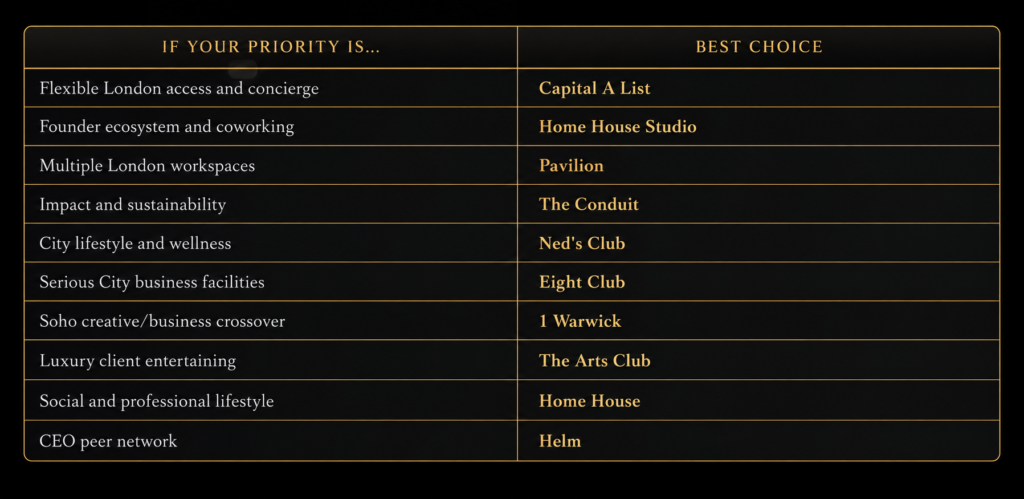
Choose Soho House if its combination of international Houses, creative community, cultural programming, hospitality and travel is exactly what you want. With access to dozens of Houses and thousands of monthly events, its scale remains difficult for a smaller London operator to reproduce.
Choose an alternative when one specific requirement matters more: serious workspace, a founder network, City convenience, client entertaining or flexible access beyond a single club group.
Private Members’ Club vs Concierge Membership vs Business Network
One reason comparisons with Soho House become confusing is that several very different products now call themselves memberships.
A traditional private members’ club gives you a physical home. Ned’s Club, The Arts Club and Home House are strong examples. The location and its facilities are a central part of what you are paying for.
A business-and-social club puts considerably more weight on work. Home House Studio, Pavilion, Eight and 1 Warwick provide environments in which meetings, desks and professional facilities sit alongside restaurants and social spaces.
Then there are access and network memberships.
Capital A List belongs in this final category, although its emphasis is concierge and lifestyle access. Rather than operating one clubhouse, it works across third-party venues and experiences.
Before applying anywhere, deciding which of those three models you actually need will eliminate half the shortlist.
How to Choose a Soho House Alternative as an Entrepreneur
Location should come first. A superb City club is not especially useful if you spend four days a week in Chelsea.
Then ask whether you really need somewhere to work. If you do, look beyond photographs of the lounge. Check laptop policies, phone booths, meeting rooms, coworking access and whether you can bring colleagues or clients.
The community matters just as much. “Networking” is an almost meaningless word unless you define whom you hope to meet. A creative founder may find 1 Warwick’s mix more useful than Eight. An impact investor may get considerably more from The Conduit. A scale-up CEO looking for frank advice from other founders is playing an entirely different game and should look at Helm.
Client entertaining is another consideration. A club can be brilliant for its member and strangely wrong for the member’s clients. If lunches, drinks and meetings are a large part of your working life, restaurants, private rooms and guest rules deserve as much attention as the gym.
Finally, ask the question many prospective members skip:
Do you actually need a clubhouse?
If you want a familiar base, absolutely. But an executive moving continuously between Mayfair, Soho, the City, restaurants and events may get more use from a concierge membership that moves with them.
That is where Capital A List becomes a genuinely different alternative rather than merely another club competing for the same monthly fee.
Is Capital A List a Soho House Alternative?
Yes, but it solves the problem differently.
Capital A List is not a traditional private members’ club and does not operate one permanent clubhouse. It is a London lifestyle and concierge membership offering assistance with restaurants, selected private members’ clubs, VIP nightlife, events and other arrangements.
For entrepreneurs and executives, that distinction can be useful.
If your priority is having somewhere consistent to work every day, Home House Studio, Pavilion or Eight will probably make more sense. If what you really want is someone to help arrange the client dinner, suggest the right private club afterwards, secure restaurant bookings and deal with the various parts of your London social and professional life, Capital A List is closer to that brief.
Its Corporate Membership extends the same model to small teams, including business dinners, meetings, hospitality, private clubs and events.
In other words, Soho House provides the House. Capital A List focuses on what happens around the city.
Explore Capital A List Membership for more information on individual, executive and corporate concierge options.
Frequently Asked Questions
What is the best Soho House alternative in London?
It depends on why you use Soho House. Capital A List is a strong option for flexible concierge-led access; Home House Studio is particularly suited to entrepreneurs; Pavilion combines business facilities with several London locations; and Ned’s Club is especially convenient for City executives.
What is the best private members’ club for entrepreneurs in London?
Home House Studio is among the clearest entrepreneur-focused physical clubs, explicitly combining coworking, meetings, business programming and an entrepreneurial community. Pavilion, The Conduit and 1 Warwick are also particularly well suited to founders depending on their industry and priorities.
Which London members’ clubs are best for networking?
For business-led networking, consider Home House Studio, Pavilion, The Conduit and Helm. They offer quite different networks: general entrepreneurs at Home House Studio, professional events at Pavilion, impact-focused leaders at The Conduit, and established scale-up founders at Helm.
What is the best Soho House alternative for executives?
Ned’s Club and Eight are particularly useful for City executives, while The Arts Club suits senior professionals who place greater emphasis on Mayfair, culture and client entertaining. Capital A List is better suited to executives who want flexible access and concierge support rather than another fixed clubhouse.
Which members’ clubs have coworking spaces in London?
Home House Studio, Pavilion, Ned’s Club, Eight and 1 Warwick all incorporate working facilities into their membership propositions, although the level of dedicated workspace, meeting-room access and booking rules varies between membership types.
Is Capital A List a private members’ club?
No. Capital A List is a concierge and lifestyle membership rather than a club based around one property. Members can request assistance across restaurants, selected private members’ clubs, nightlife, events and other lifestyle arrangements.
Can Capital A List provide access to private members’ clubs?
Capital A List states that members receive selected access to London private members’ clubs. Individual visits and access remain subject to the policies, availability and discretion of each venue.
Is Soho House good for business networking?
It can be, particularly for people working in creative industries. Soho House has a large international community and extensive events programme, and members regularly use its Houses for meetings and professional connections. Entrepreneurs looking for more structured business networking, however, may prefer clubs or communities designed specifically around founders and executives.
Which Soho House alternative is best for City professionals?
Ned’s Club and Eight are the most obvious options. Both have strong City locations, professional meeting and working facilities and spaces for dining or entertaining. Pavilion’s City location is another useful alternative.
Are there Soho House alternatives without joining a single clubhouse?
Yes. Capital A List provides a concierge-led membership working across London rather than operating one clubhouse, while Helm is primarily a curated founder and CEO network. These can make more sense for people whose main priority is access, assistance or professional relationships rather than regular use of one physical venue.